

The storied rivalry between English & Australia teams is defined by unforgettable figures. Within, fans recount their favourite stars from men's Ashes history.
The Pugnacious Bairstow
When asked about a favourite player, the choice falls on the combative Jonny Bairstow. His career in the Ashes aptly encapsulates the triumphs and tribulations for an England career. It started in 2013, where he tempered his attacking instincts to graft alongside Ian Bell. Later that year, he stepped up to replace wicketkeeper Matt Prior, confronting the fearsome pace of Mitchell Johnson having no red-ball cricket in three months.
He had a series-winning comeback during 2015 and is the sole England player to have scored two away Ashes centuries since 2011, an achievement managed despite ferocious media attention. A poor campaign followed during 2019, though there was a crucial cameo at Headingley that aided the famous run chase by Stokes and Leach. After returning for the 2023 series, a magnificent unbeaten 99 in Manchester was cruelly robbed of a series-turning result by persistent weather.
Syd Barnes
Few bowlers command such awe like the wonderful Syd Barnes. His figures taking 13 wickets across 80 overs during the second Test stands as a monument to his skill. One can only wonder what more he could have accomplished had he been a less difficult man to handle. With a staggering 6,229 wickets at a cost of just 8.33, many consider the finest bowler. Studying his records as a youth was utterly enthralling. What a a glorious bastard, truly without equal. As MCC secretary Billy Griffith: “What was remarkable about him is that all his contemporaries thought him the best there was. There was never any doubt about it.”
The Charismatic Richie Benaud
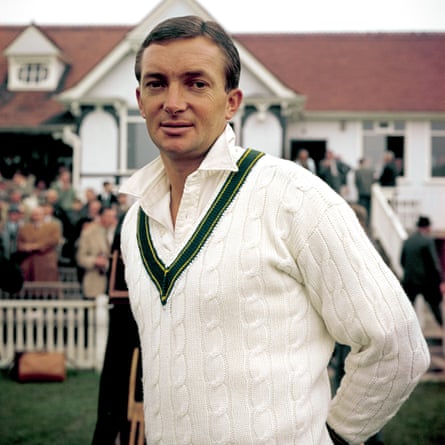
For many, the favourite player is the iconic Richie Benaud. Starting high school during 1961 aligned with that year's Ashes, and the excitement was provided by the dashing skipper. Benaud stood out like other cricketers; he possessed style combined with daring, offering difference from the seemingly traditional approach. An articulate, commanding captain who arrived with a reputation for playing attacking, exciting cricket.
Memories of that summer, where a lifelong love affair with cricket began, focus on the last day at the fourth Test. Watching intently a television, a young fan watched England chase 256 to win. A good start saw the dashing Ted Dexter play what many consider a magnificent Ashes innings. Yet he fell for 76, caught by Wally Grout off the bowling by Benaud. Hope remained as skipper Peter May coming at the crease. Benaud bowled and May steer the ball to the on side. The next ball, Benaud bowled again outside the pads, the ball spun viciously out of the footmarks to bowl him. May was out for zero, the silence deafening. Benaud won the match taking 6 for 70 and Australia retained the Ashes. It was mixed emotion—wanting an England win but in awe of an undeniable champion.
Ian Botham
He is the greatest England cricketer. Relentless, heroic, brilliant. For his heroics at Headingley in '81, the exploits at Old Trafford that same year, the victorious 1986-87 Australian tour, and his iconic comment directed at the bowler Merv Hughes. A hero not just for his charity work and his tremendous strength of character.
Harry Boyle
The annals sometimes forget figures like Harry Boyle, yet he deserves to certainly be in any list of key figures in Ashes history. Boyle served as Fred Spofforth's new-ball partner during the famous 1882 match, and his contribution proved just as crucial as Spofforth's in securing the win. Indeed, he was the one who dismissed Edmund Peate to win the match. While Spofforth is celebrated as the pioneer of pace bowling, Boyle was modest and self-effacing, always prioritising the collective. This humility has led to his legacy becoming somewhat forgotten, even though at his passing widely recognised as an important figure in the sport's development.
The Incomparable Don Bradman
The choice has to be Don Bradman. While leg-spinner Shane Warne is a legend, the monumental volume of runs he accumulated against the old foe, coupled with his shrewd captaincy, cements him as more than a cricket legend but as the only possible answer. An Ashes average just shy of ninety, two triple centuries, and a magnificent double following an ingenious decision to reverse the lineup and shield his senior players on a treacherous pitch at the MCG in 1937.
Although not alive in his time, any cricket fan learns with his exploits from the 1930s and the 1948 tour. While most remember his last innings zero preventing a three-figure average, others cherish images of him practising for hours using a water tank, and seeing him endure the vicious Bodyline series to still average with a 56 average during a notoriously difficult series for batsmen. He endures as the ultimate batsman for countless fans.
The Cerebral Mike Brearley
He elevated the art of captaincy, with its critical role, to unprecedented heights. He epitomised an era by demonstrating that winning against Australia, particularly down under, needed not just hard work or power. He motivated with considered, astute leadership, fostering a culture where his team's true qualities thrived. His reading of situations, the match state, and player psyches excelled at the very moments a shift in momentum was needed.
This was a nuanced, nuanced approach {that challenged|contradict


